• Welcome to TalkWeather!
    We see you lurking around TalkWeather! Take the extra step and join us today to view attachments, see less ads and maybe even join the discussion.
    CLICK TO JOIN TALKWEATHER

Severe Weather 2026

If you play your cards right, you could have a significant May Deep South severe weather outbreak Wednesday.....

Joking aside though I do believe Wednesday threat could end up being a bigger deal not the mention we'll have to monitor for additional heavy rain/flash flooding issues.
Yeah, broadly-speaking, this is what you'd look for in a fairly classic Deep South severe event. Still some time for things to change, but the general ingredients are definitely coming together here.
7pgpiDc.png
JjAXKl6.png
 
Some intense values coming off CIPS. Trough shape has trended a little more zonal for the past couple of runs, will have to see what happens there, but overall synoptics look favorable. Definitely a setup that the Midsouth and Southeast should keep a close eye on.
PRALLC01_gfsF096.png
PRALLC10_gfsF096.png
PRTORNC01_gfsF096.png
PRLONGTC01_gfsF096.png
 
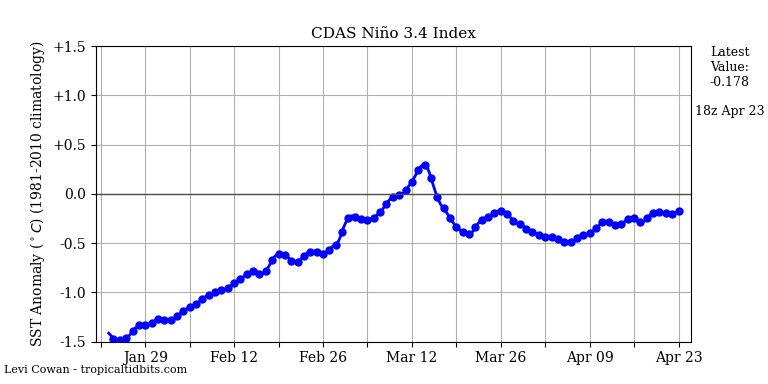
Ocean temps keep skyrocketing. We've gone from neutral to positive .84 degrees in less than 3 weeks. The super El Nino forecast (positive 2 or more) is seeming more and more likely.

nino34.png


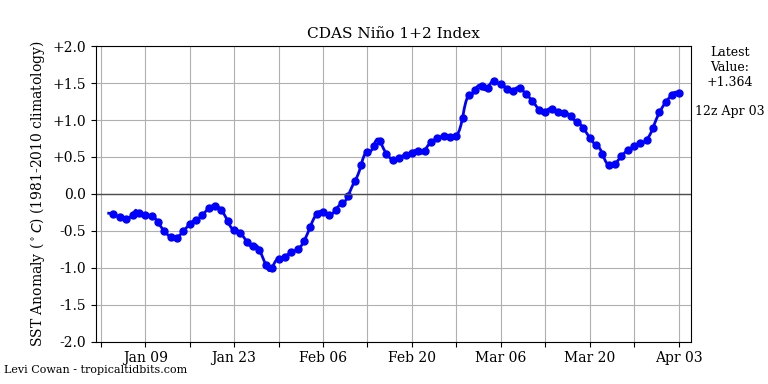
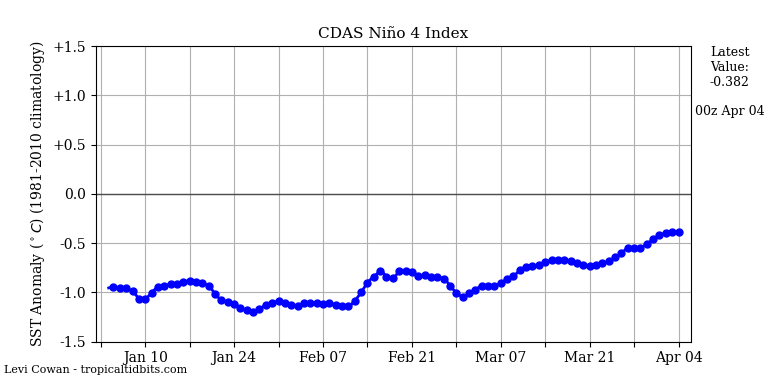
Also TNI values are now basically at 0. (Nino 1+2 minus Nino 4)

nino12.png

nino4.png
 
Last edited:
Ocean temps keep skyrocketing. We've gone from neutral to positive .84 in less than 3 weeks. The super El Nino forecast (positive 2 or more) is seeming more and more likely.

nino34.png


Also TNI values are now basically at 0. (Nino 1+2 minus Nino 4)

nino12.png

nino4.png
Good. Hope we
Break or shatter the record by winter
 
Ocean temps keep skyrocketing. We've gone from neutral to positive .84 degrees in less than 3 weeks. The super El Nino forecast (positive 2 or more) is seeming more and more likely.
Time to dread the 2027 tornado season, I remember what happened after the last super El Niño...
 
Time to dread the 2027 tornado season, I remember what happened after the last super El Niño...

I found this tidbit from here notable:

The 1997–1998 El Niño event was regarded as one of the strongest El Niño events in recorded history, which resulted in widespread drought, flooding and other natural disasters occurring around the globe. Afterwards the climate of the Pacific Ocean was dominated by a cool phase of the Pacific decadal oscillation, with three significant La Niña events occurring between 1998–2001, 2007–09 and 2010–12.

So if this is anything to go by; the second year of Niña (the spring following the year in which it develops) is the one to really watch out for (in these groupings that would be 1999, 2008 and 2011). The year in which the Niña develops can be active for severe weather, but usually not hyperactive on the level of the second years; while the third year (in which the Niña usually decays to neutral or flips back to El Niño) usually features near-to-below average levels of activity but can still have the occasional big outbreak.

Would need a bigger sample size to draw any definitive conclusions from this, though. Would go a long ways toward explaining why just having a La Niña doesn't necessarily equate to an active tornado season, and in some cases they can be rather quiet.
 
If y'all read today's discussion from SPC, they do give hints of additional severe weather chances next week that might involve the Deep South again. Which is crazy because I thought a while back wouldn't it be ironic if we made up for lack of severe weather for most of early/mid April and last Fall in May.
 
I found this tidbit from here notable:


So if this is anything to go by; the second year of Niña (the spring following the year in which it develops) is the one to really watch out for (in these groupings that would be 1999, 2008 and 2011). The year in which the Niña develops can be active for severe weather, but usually not hyperactive on the level of the second years; while the third year (in which the Niña usually decays to neutral or flips back to El Niño) usually features near-to-below average levels of activity but can still have the occasional big outbreak.

Would need a bigger sample size to draw any definitive conclusions from this, though. Would go a long ways toward explaining why just having a La Niña doesn't necessarily equate to an active tornado season, and in some cases they can be rather quiet.
I was thinking more in terms of 2023-2024, which preceded the absolutely terrible 2024 tornado season up here.
 
If y'all read today's discussion from SPC, they do give hints of additional severe weather chances next week that might involve the Deep South again. Which is crazy because I thought a while back wouldn't it be ironic if we made up for lack of severe weather for most of early/mid April and last Fall in May.
Is this the system on Mother’s Day?
 
Is this the system on Mother’s Day?
No. It would be more into next week which would be another system after this weekend.
 
Hey @akt1985 I stand corrected. Looking at it more closely, Yes, there could be at least a low end severe weather risk on Sunday. A lot of uncertainty though at this juncture.
 
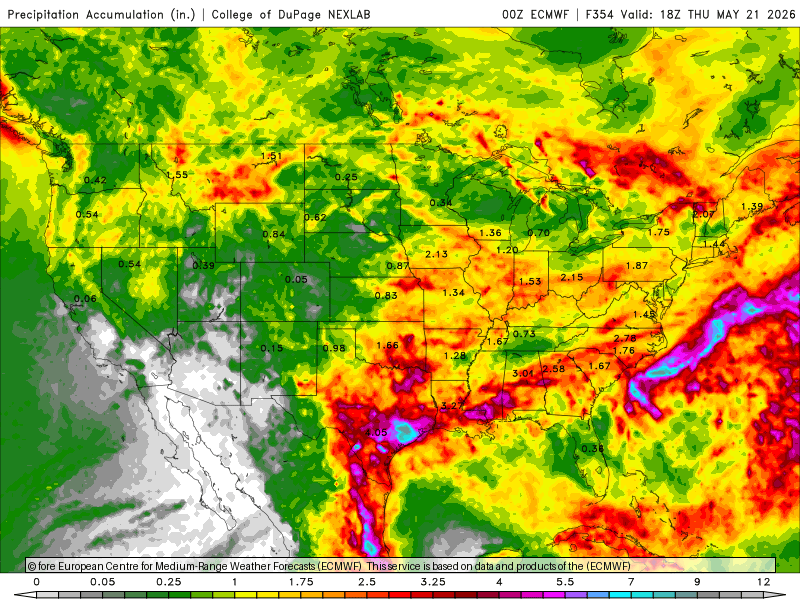
This is killing me. Not a drop of rain all spring but the minute we send the town rec baseball/softball playoff schedules out and release the All-Star rosters, meaning we'll have 6-10 teams on the field any given night through July 1, the heavens open. It's so classic Deep South. All you can do is laugh!
 
This is killing me. Not a drop of rain all spring but the minute we send the town rec baseball/softball playoff schedules out and release the All-Star rosters, meaning we'll have 6-10 teams on the field any given night through July 1, the heavens open. It's so classic Deep South. All you can do is laugh!
Yep - I believe it was in the drought discussion thread we talked about how we would probably be paid back twofold with summer rain.
 
Looked at the longer term on the CIPS Extended Guidance site - since uploading some photos is an issue on this site, here's what I noticed:
  • Ridge development and progression to the eastern half of the CONUS.
  • Temperature and UPD anomalies shown back up this solution.
  • Some possibilities of SVR across the Central CONUS and Midwest - neither are unheard of nor a surprise at this juncture of the year. Big area was shown for the 3 extended day periods with a few stronger chiclets, but nothing major.
  • Does seem like a decent chance for the SE CONUS to dry out in spots from the recent and much-needed rains. We are entering the time of the year where big troughs are decreasing, so mesoscale details will become key towards homing in on any potential SVR threats.
 
Back
Top